

Winners of the 2026 Daphne Caruana Galizia Prize will be announced on October 21 at the European Parliament.
Three investigations supported or seeded by the Investigative Journalism for Europe (IJ4EU) programme have been shortlisted for the prestigious 2026 Daphne Caruana Galizia Prize for Journalism.
War Made Sustainable, Sponsored Hate and Inside Europol’s Shadow IT System are among the 10 finalists competing for the European Parliament’s annual award, which recognises outstanding journalism defending European values, including democracy, the rule of law and human rights.
The winner will be announced on October 21, 2026 at the European Parliament in Strasbourg.
The three investigations examine different forms of power and accountability, from the interests shaping European investment policy to the paid amplification of attacks on independent voices and the safeguards governing police access to sensitive information.
War Made Sustainable:
How green investment funds bankroll the arms industry with EU backing
Coordinated by Voxeurop, with contributions from El País, IrpiMedia and Mediapart, this investigation traced how investment funds marketed as green or socially responsible channel billions of euros into weapons manufacturers.

The team’s analysis found that such investments in the arms industry rose to €49.8 billion in 2025 from €14.5 billion in 2021. Drawing on financial data, internal documents and records of lobbying meetings, the reporting examined how arms manufacturers and the European Commission helped promote the defence sector’s inclusion in sustainable finance.
It raised questions about what sustainability labels mean in practice — and whether savers know what their money is funding.
Sponsored Hate:
How politicians across Central Europe use paid social media ads to attack journalists and civil society, spreading disinformation and hate
Led by the Investigative Centre of Ján Kuciak, in collaboration with investigace.cz, FRONTSTORY.PL and VSquare, this investigation examined how political actors in Slovakia, Hungary, the Czech Republic and Poland paid to spread attacks on journalists, activists and civil society organisations.

The journalists analysed thousands of political advertisements from July 2024 to June 2025, identifying 773 ads on Meta platforms that used hateful, offensive or derogatory language.
The reporting documented campaigns portraying independent voices as traitors or agents of foreign interests, and explored how these narratives could evade platform moderation while undermining public trust in journalism and civil society.
‘They protect the law while breaking it’: Inside Europol’s Shadow IT System
An investigation by Solomon, CORRECTIV and Computer Weekly examined a parallel data-analysis environment within Europol, the EU’s police agency. The investigation builds on research from Hungry for Data: Inside Europol’s Secretive AI Programme, a project supported by IJ4EU in 2025.
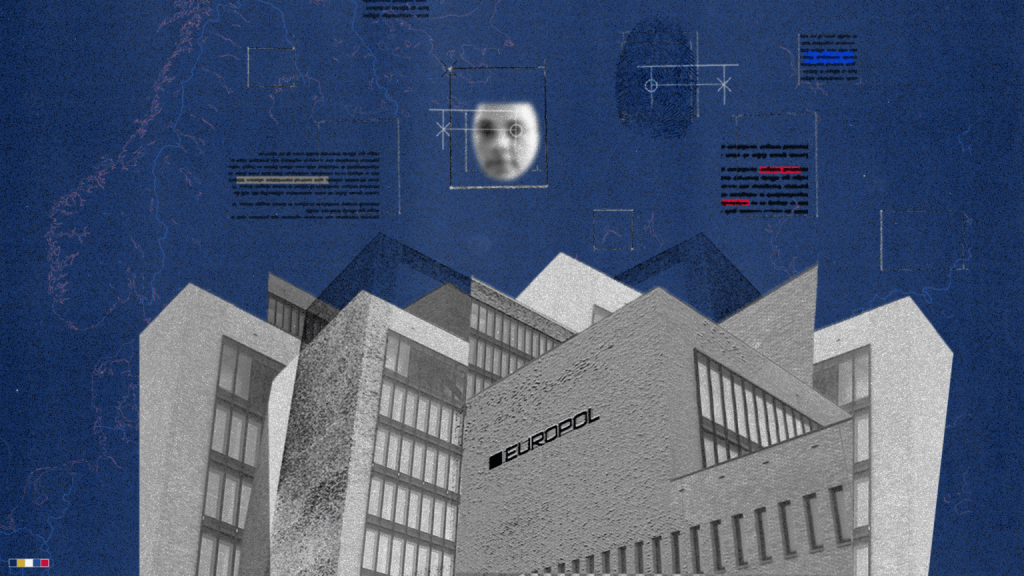
Based on leaked emails, internal reports and testimony from former officials, the team reported that the system processed vast amounts of sensitive personal information, including data concerning people not suspected of crimes, without basic security and data-protection safeguards required under EU law.
Former officials also alleged that parts of the system had been concealed from the European Data Protection Supervisor. Europol disputed the allegation that it had hidden information from the watchdog, saying it had reported transparently about its processing systems.
The €20,000 prize honours the memory of Daphne Caruana Galizia, the Maltese investigative journalist assassinated in 2017.
Explore the full shortlist for the 2026 Daphne Caruana Galizia Prize for Journalism.