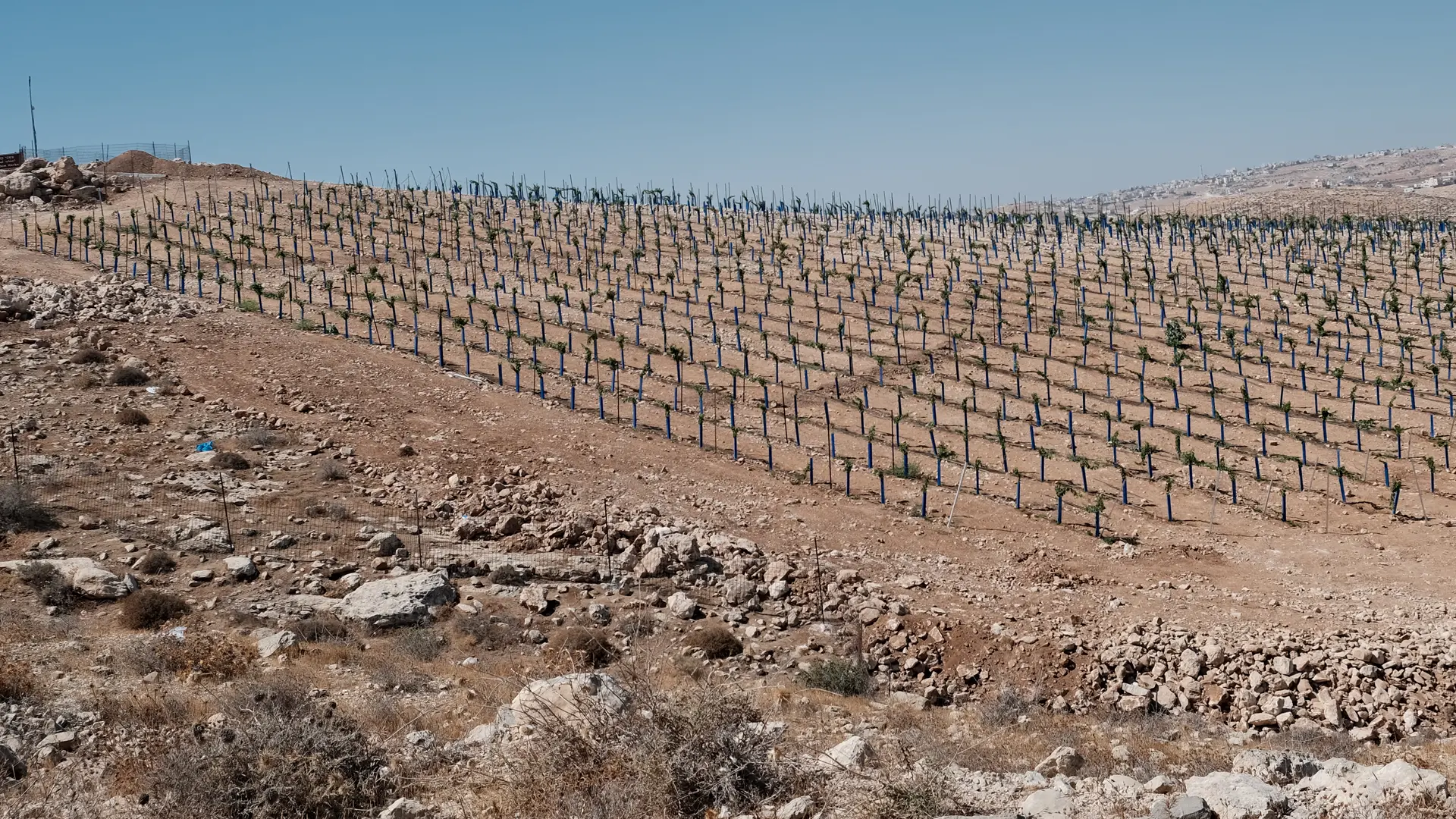


Across the occupied West Bank, Israeli settlers are intensifying attacks on Palestinian communities, forcibly displacing them at unprecedented rates and seizing their land for settlement expansion. Vineyard planting for Israel’s wine industry has become a strategic tool of this dispossession: after taking Palestinian land, settlers replant it with vineyards and then export the wine as “Made in Israel”, obscuring its origins.
Israel produces around 45 million bottles of wine annually, and exports have doubled in the last decade. The EU is the second-largest market after the United States, accounting for about a third of wine exports. These wines generate profits for settlers while preventing Palestinians from returning to their land.
This months-long investigation reveals the complicity of European markets in selling Israeli wines produced in illegal settlements, and how they are entangled in normalising and sustaining this economy of dispossession.
It establishes direct links between wine labels sold in the EU, settler violence and land grabs. It also exposes how Israeli wineries and EU importers are violating regulations that forbid labelling products from the settlements as “Made in Israel”, unfairly benefiting from preferential treatment under the EU–Israel trade agreement.
The investigation involved over a month of fieldwork, including visits to wineries and vineyards across the West Bank and the Golan Heights; dozens of interviews with Palestinian farmers, researchers, and human rights and international law experts; and analysis of aerial imagery, trade data and corporate filings.
The project examines the impact of the settler wine industry on Palestinian communities, highlighting the international obligations of the EU concerning economic relations with illegal Israeli settlements and exposing the policy of exceptionalism that has characterised the EU’s response to Israel’s serious violations of human rights and international law.