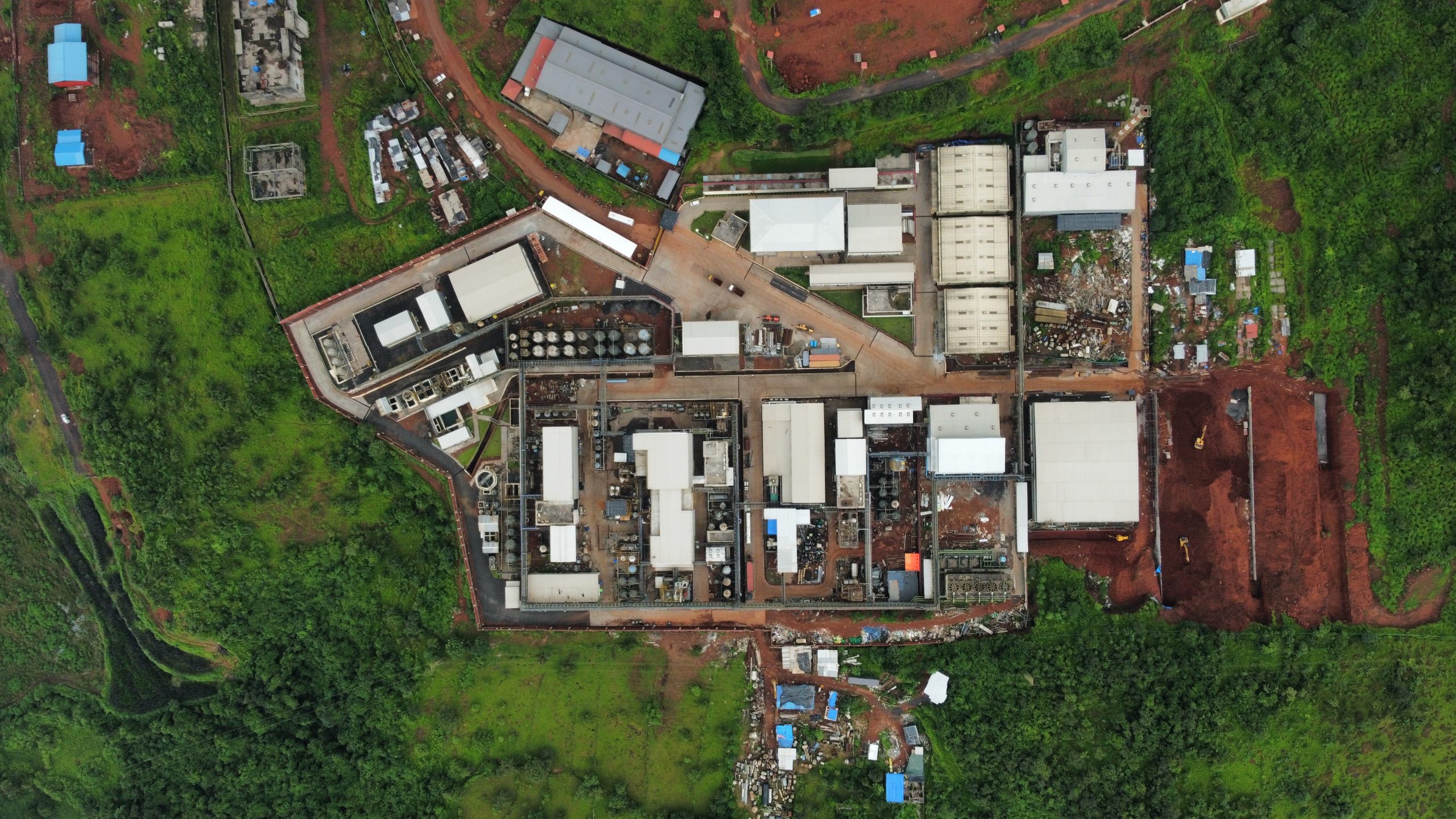


This cross-border investigation examines how a chemical plant linked to one of Europe’s largest PFAS contamination scandals did not disappear after its closure. Instead, it was dismantled, transferred across borders, and restarted in a new jurisdiction.
At the centre of the story is Miteni S.p.A., a fluorochemical manufacturer based in Trissino in northern Italy, which for decades played a key role in the production of per- and polyfluoroalkyl substances (PFAS). These substances are often referred to as “forever chemicals” because they persist in the environment and the human body.
Founded in the 1960s, the Miteni plant grew into a major European producer of fluorinated chemicals used in textiles, agrochemicals, and pharmaceuticals.
By the early 2010s, Italian authorities identified the facility as the main source of extensive PFAS contamination of groundwater and drinking water in the Veneto region, exposing hundreds of thousands of residents.
Escalating legal action, environmental scrutiny, and financial pressure pushed the company into bankruptcy in late 2018. Authorities subsequently ordered the permanent shutdown of the site.
The story did not end there.
In 2019, Laxmi Organic Industries, an Indian chemical company seeking to enter the fluorochemicals market, acquired selected assets from the bankrupt Miteni plant at auction. These assets included machinery, patents, technical documentation, and REACH registrations.
Over the following years, workers dismantled the equipment in Italy, shipped it to India, and reassembled it at a new facility in Lote Parshuram, Maharashtra.
By 2024-2025, the plant had resumed production. In practical terms, this extended the operational life of a European PFAS facility by decades, but under a different regulatory regime and far from the communities originally affected by pollution.
This investigation reconstructs that industrial relocation step by step. It shows how hazardous chemical production can continue despite factory closures, criminal convictions, and tightening regulation in Europe.
Rather than eliminating environmental and health risks, the process shifts them geographically.
Key findings
The Italian plant was dismantled and reassembled in India. Core production units previously used at Miteni — including facilities for perfluorinated substances, fluoroaromatics, benzotrifluoride derivatives, and a pilot plant — were sold during the bankruptcy process and later reinstalled in India. This preserved both physical equipment and production know-how.
Production continuity was confirmed across borders. The Indian facility now manufactures several of the same fluorinated substances previously produced in Italy. Product lists, environmental permits, and technical documentation reveal substantial overlap between Miteni’s historical output and Laxmi Organic Industries’ current fluorospecialty portfolio.
PFAS manufacturing continues under evolving definitions. Depending on whether OECD or ECHA definitions are applied, a significant share of the substances produced at the new site qualify as PFAS. Under the broader definition proposed in the EU’s REACH restriction, many aromatic fluorinated compounds now produced in India fall within the PFAS category.
Former and new global customers are being supplied. Trade records, shipping data, and corporate disclosures show that Laxmi Organic Industries has attempted to take over Miteni’s former customer base while also expanding into new markets. Sample shipments and regulatory approvals demonstrate active efforts to re-establish commercial relationships disrupted by the Italian plant’s closure.
Environmental and regulatory risks are shifted, not resolved. As Europe moves toward stricter PFAS regulation, the relocation of production exposes a structural gap: hazardous chemical manufacturing can continue elsewhere and still supply global — including European — markets, without addressing the underlying environmental and public-health harms.
Methodology
The investigation used a multidisciplinary research design that combined chemistry, economics, corporate analysis, and investigative journalism.
Empirical work drew on multiple methods, including in-depth interviews with former Miteni employees and industry experts; consultations with chemists and regulatory specialists; and systematic analysis of corporate disclosures, bankruptcy records, and environmental authorisations.
Freedom of Information requests yielded official documents on permits, production volumes, and regulatory compliance.
The team used advanced business-intelligence tools to analyse trade flows, shipment records, and customer relationships, enabling the tracking of chemical products across borders through HS codes, CAS numbers, and customs documentation.
Chemical identification relied on structural analysis using SMILES notation to classify substances according to competing international PFAS definitions and regulatory frameworks.
Satellite imagery and geospatial analysis verified the construction, layout, and operational status of the new production site in India.
Systematic scraping and archival research made it possible to reconstruct historical product lists, patents, and client portfolios.
Researchers also conducted several field expeditions, including a reporting mission to India to document the new facility and its industrial surroundings.
Taken together, these methods allowed the team to reconstruct the plant’s full trajectory — from contamination and closure in Europe to reactivation in Asia — and to develop a replicable framework for tracking hazardous chemical production across global supply chains.
See the stories below.