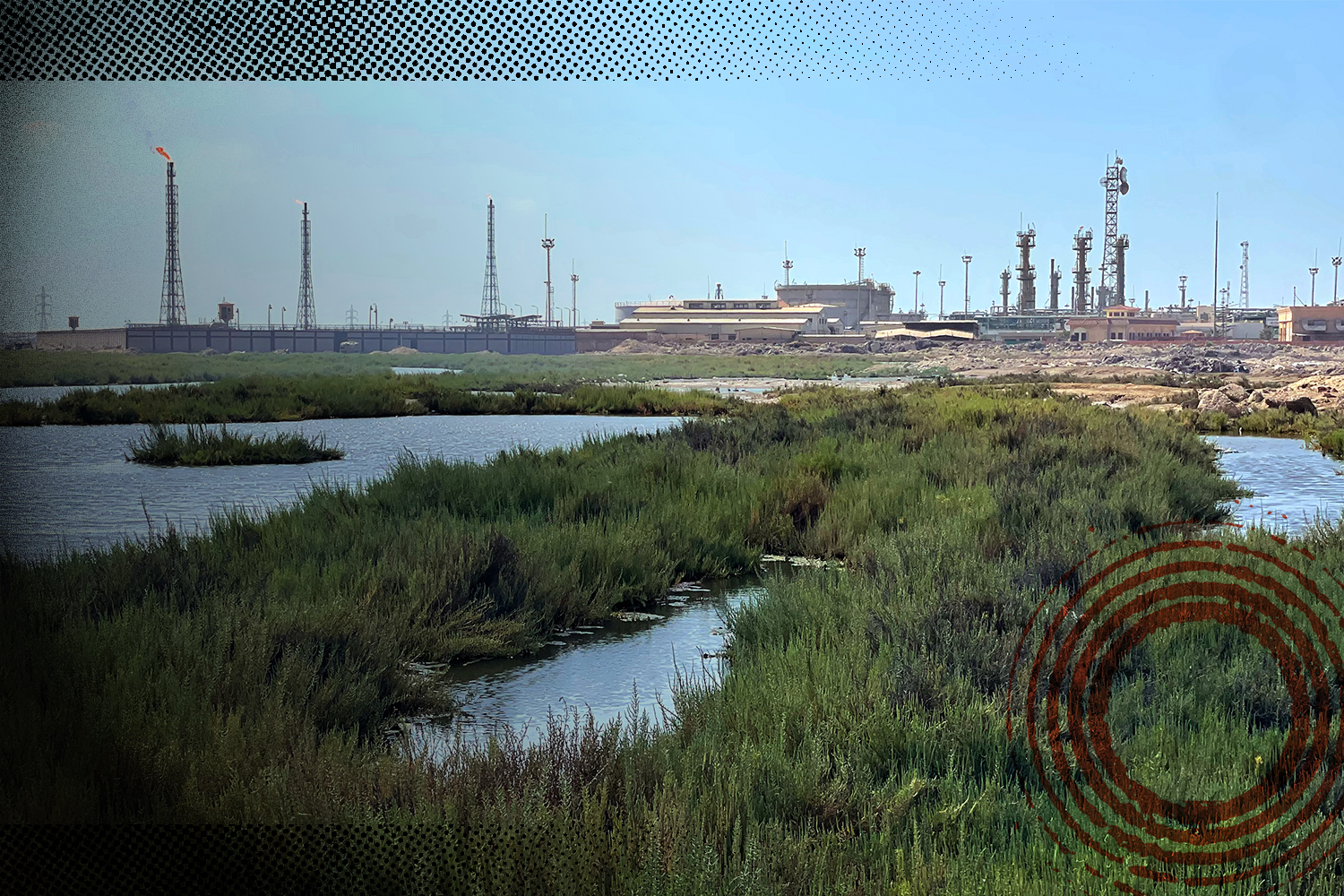


Fueling Ecocide is a year-long cross-border investigation led by the Environmental Investigative Forum (EIF) and European Investigative Collaborations (EIC), in partnership with 13 international media outlets. It exposes how oil and gas companies — including major European corporations — continue to operate inside some of the world’s most precious and fragile protected natural areas, despite international legislation and repeated conservation commitments.
 The investigation takes readers from the Great Barrier Reef in Australia, with its multicoloured marine ecosystems, to the Maya Biosphere Reserve in Guatemala, Central America’s largest rainforest and a refuge for jaguars, monkeys and crocodiles, and to the Lower Ogooué marshes in Gabon, home to endangered elephants and hippos.
These biodiversity sanctuaries, which should be free of industrial activity, face a disturbing reality: they are increasingly surrounded — and, in many cases, penetrated — by oil and gas infrastructure.
To measure the true scale of this encroachment, the investigation compared 315,000 protected areas listed in the World Database of Protected Areas with geospatial data covering 15,000 oil and gas licences across 120 countries, provided by industry data firm Mapstand. The results reveal that more than 7,000 protected areas worldwide overlap with fossil-fuel operations.
This expansion continues despite repeated calls by UNESCO and the IUCN to ban oil and gas extraction in protected areas. The investigation identifies hundreds of companies active in these zones, including well-known European majors such as Shell, ENI and TotalEnergies.
Over the course of a year, journalists in 18 countries across Europe, South America, Africa and the Middle East worked together to move beyond statistics and expose the corporate actors behind the damage. For the first time, the investigation demonstrates that companies such as Shell, TotalEnergies, Perenco and ENI rank among the world’s ten worst offenders for fossil-fuel extraction inside protected areas.
The investigation shows that the degradation of the planet’s most important conservation areas is not the result of isolated violations, but of a global and systemic failure — one driven by corporate practice, regulatory weakness and political inaction, with profound consequences for biodiversity, climate stability and the credibility of international conservation policy.
See the stories below in seven languages.