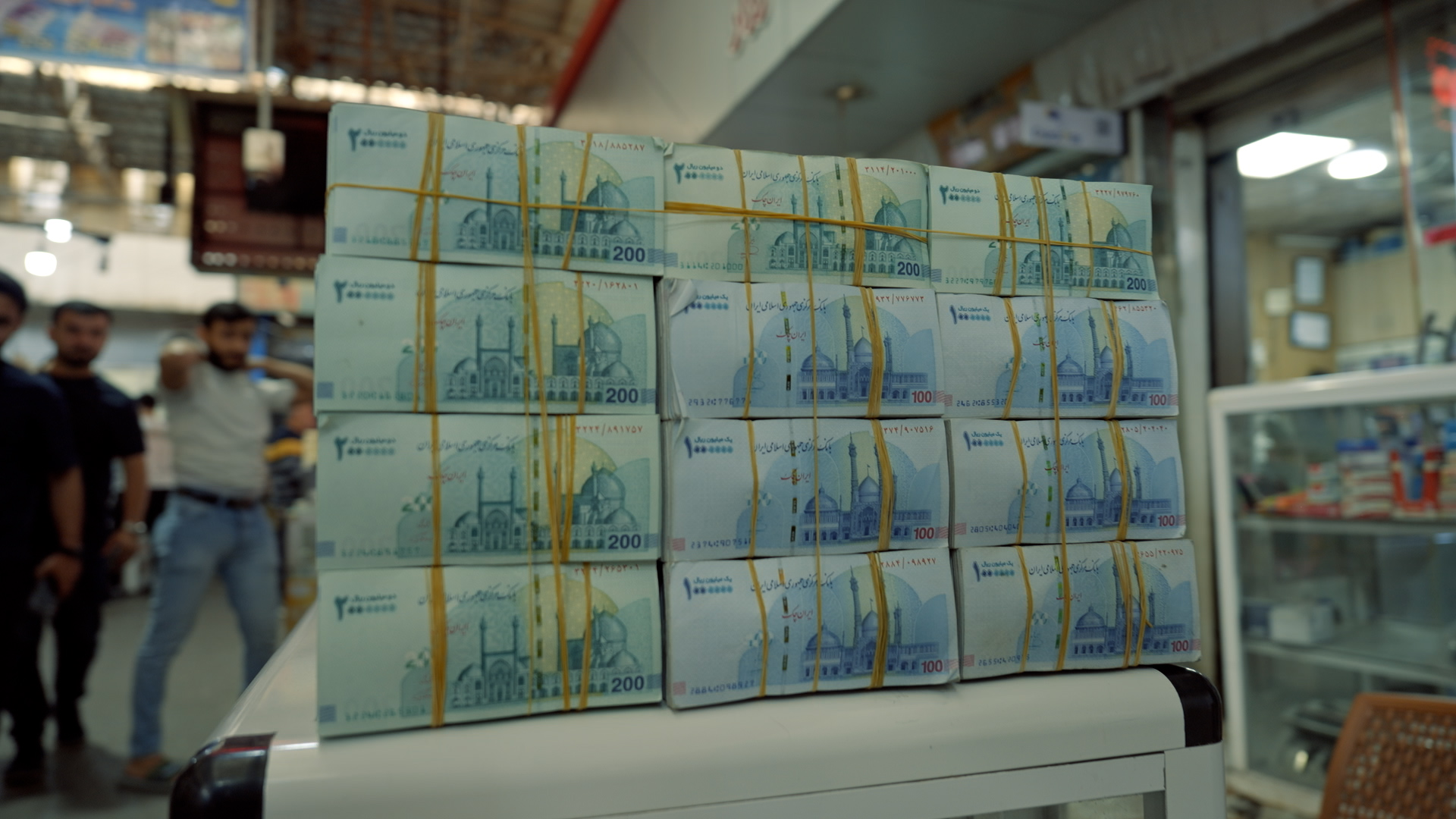


An investigative team of journalists from Belgium, Denmark, Spain and Austria uncovers a secretive world of underground banking, tracing the criminal networks that exploit the “hawala” financial system and tracking down some of the key figures behind them.
The Underground Bankers exposes how criminal organisations use hawala networks to launder money, finance terrorism and move illicit funds across borders.
Stretching back to the time of the Silk Road, hawala is an informal money-transfer system in which funds are moved through networks of trusted brokers, often without money physically crossing borders or transactions passing through conventional banks. Widely used for legitimate purposes, the system can also be exploited by criminals because transactions may leave little formal financial trail.
From drug trafficking to human smuggling, the investigation follows the flow of dirty money through informal financial networks, exposing the vulnerabilities that make them attractive to criminals and the difficulties authorities face in combating their misuse.
In Spain, the team uncovers links between human-smuggling networks and sophisticated Chinese money-laundering operations. Their findings reveal how proceeds generated through the exploitation of migrants can be channelled through complex financial networks and converted into apparently legitimate, difficult-to-trace funds.
In Belgium, the journalists investigate what authorities describe as one of the largest hawala networks uncovered in Europe. Operating as an underground financial system for criminal groups, the network extended as far as Syria and was allegedly used to facilitate discreet transfers of money to Islamic State extremists.
The investigation also traces how proceeds from drug trafficking can be laundered through large-scale VAT and tax fraud.
Using networks of Danish shell companies, criminal operators are able to move illicit funds into the formal banking system and convert them into legitimate goods. The trail ultimately leads to the Middle East, where the assets move beyond the immediate reach of European authorities.
The team
The project was carried out by the EBU Investigative Journalism Network, an international consortium of investigative journalists and editors from the European Broadcasting Union membership.
Reporting team: Kasper Vilsmark, Jens Langhorn, Niels Sandøe, Louise Hummelmose Nielsen (DR, Denmark); Victor Van Driessche, Débora Votquenne (VRT, Belgium); Romane Bonnemé, Guillaume Wollner (RTBF, Belgium); Pilar Requena (RTVE, Spain); Christoph Bendas (ORF, Austria); Luc Martinon, Lili Rutai (EBU).
Text and project coordination: Belén López Garrido (EBU)
Sub-editor: Kate de Pury (EBU)
Web and graphic design: Ángel Salgado Ramos (EBU)