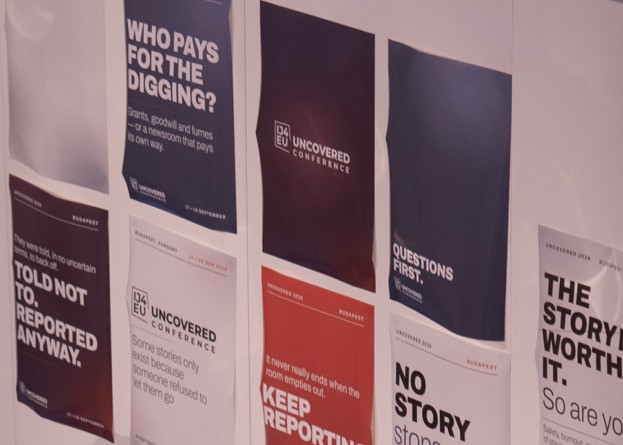


When Romanian investigative journalist Andrei Petre began researching secrecy surrounding European data centres in 2025, he had documents, a story idea and, eventually, an interested publisher.
What he didn’t have was funding.
Petre applied for a journalism grant but was rejected because his preliminary research was judged insufficient. He continued researching and applied again.
While he waited, another investigative team published a story based on one of the key public documents he had found. His prospective publishing partner was subsequently approached to join that investigation instead. Petre did not get the grant.
His experience illustrated a dilemma at the heart of “The Uneven Split”, a panel debate at IJ4EU’s 2026 UNCOVERED Conference in Budapest: freelancers may need to undertake substantial unpaid reporting to secure funding, but waiting for that funding can mean losing a fast-moving story.
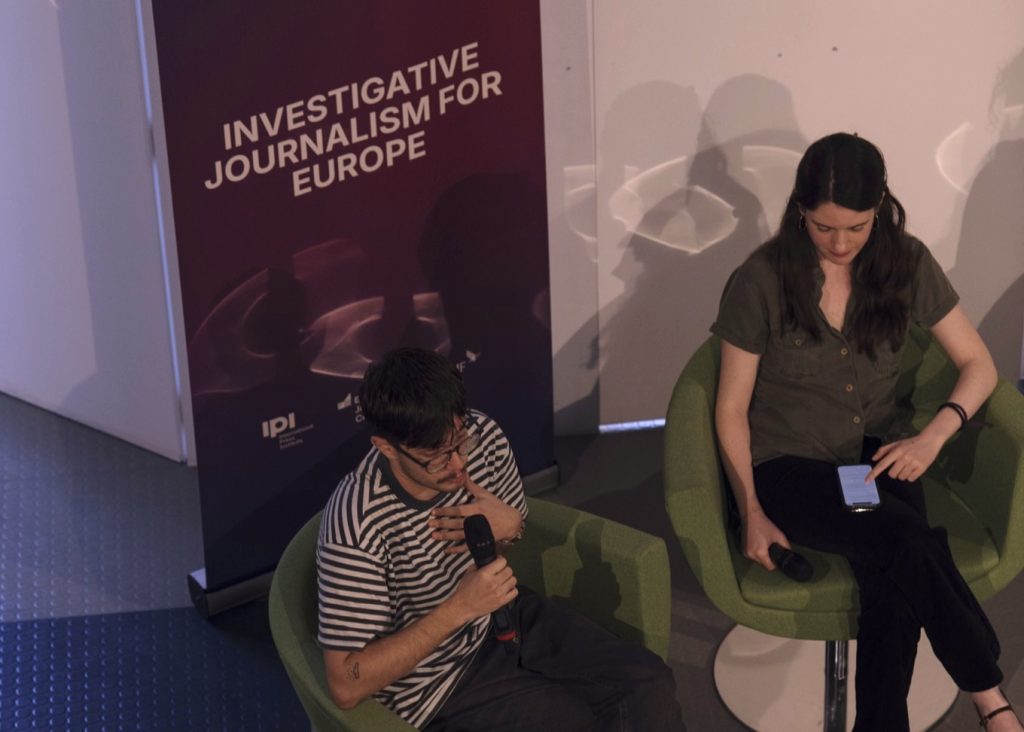
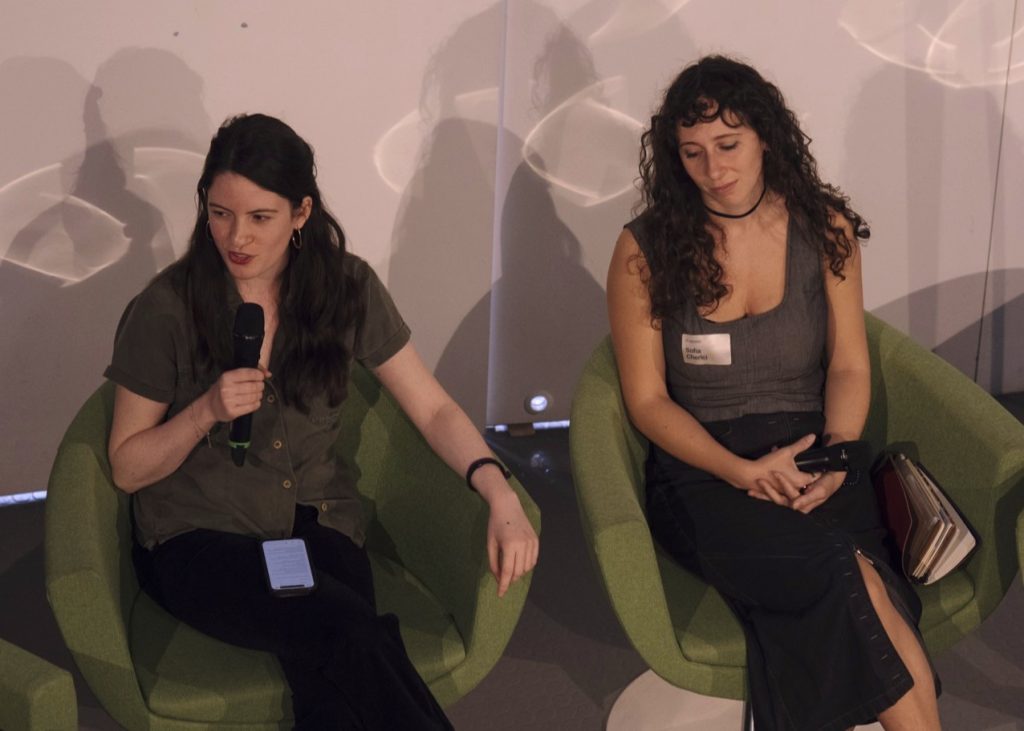
“You cannot really cover stuff that other people are already covering because you have to wait a lot until you get a grant,” Petre said.
Moderated by European Journalism Centre project manager Juliette Gerbais, the session brought Petre together with freelance investigative journalist Sofia Cherici to examine whether grant systems affect freelancers differently from staff journalists and established media organisations.
An on-the-spot poll of participants seated in the amphitheatre of the Goethe Institute in Budapest, which hosted the conference, offered a snapshot of freelancers’ dependence on grants.
Of the 20 freelancers who responded, half said grants covered more than 75% of their investigation budgets. Yet little of that grant money put food on the table — 65% said grants provided less than a quarter of their personal income.
The contrast suggested one of the tensions running through the discussion: grants can be essential to making investigations possible without necessarily providing stable livelihoods for the freelancers carrying them out.
Smaller grants, same investigations
Cherici said tighter journalism funding had intensified competition and increased pressure on applicants to ask for smaller amounts.
She described a team that sought €30,000 for an investigation and was unsuccessful. Months later, it applied with the same story for €15,000 and received the grant.
“Stories are not actually getting any cheaper,” Cherici said.
The shortfall still had to be filled, meaning more time spent searching for donors and submitting applications.
“I’m wasting my time instead of doing investigation, wasting my time doing grants,” she said.
Cherici said freelance fees could become an obvious place to squeeze budgets, recalling occasions when partner outlets had asked her to lower hers.
Cutting fees could have consequences beyond individual journalists, she argued. Freelancers may have to juggle several grants and investigations at once, putting additional pressure on deadlines and the work itself.
The hidden cost of applying
The burden begins before any grant is awarded.
Cherici said applications for some grant schemes were becoming longer and increasingly required substantial pre-reporting. For a staff journalist, that work may be covered by a salary. For a freelancer, it often is not.
“If you’re a freelancer, that is unpaid work,” she said. “That is speculative work.”
That concern was echoed in the audience poll. Asked about the biggest barriers freelancers faced in accessing grants, participants mentioned unpaid pre-research, lengthy applications, time, administration, writing proposals, lack of networking and support, competition and the limited number of grants available.
Petre said the requirement for strong preliminary reporting could effectively determine which subjects a freelancer could afford to investigate.
“If you are not a staff journalist or you do not have enough money to work on this unpaid labour basically, for preliminary research and stuff, you can be excluded from stories that are hot topics,” he said.
For Petre, the instability ultimately became too much. After seven years as a freelancer, he joined Romanian outlet PressOne in September 2026. He described the cycle of finishing one grant-funded investigation while applying for the next and never knowing whether more funding would arrive.
Make optional requirements genuinely optional
Another pressure point was the letter of interest from a prospective publisher that many grant programmes ask applicants to submit.
Cherici said such letters could be comparatively easy for established organisations to get but difficult for freelancers, particularly as editors became more reluctant to issue them.
Even when a letter was described as optional, she said, freelancers could worry that omitting it might count against them.
“It is a pressure,” she said.
One alternative, Cherici suggested, would be a two-stage process: assess a short pitch first and ask shortlisted journalists to secure a publisher’s interest only once a funder has indicated that it wants to support the story.
“That means that you can approach outlets knowing I will have the money for this story,” she said.
Petre also called for clearer assessment criteria and different approaches for freelancers and established outlets. Among his other suggestions were more funding, seed grants and forms of core support.
Asked what they would change about grants for freelancers, audience members offered similar answers: less bureaucracy, simpler applications, more time to apply, greater flexibility, better accessibility, individual grants and application support.
Strength in numbers
Cherici said another response was for freelancers themselves to build some of the infrastructure normally provided by a newsroom.
She and around seven other journalists are forming Mira, a cross-border collective focused on the Mediterranean. Its members will remain freelancers while sharing story ideas, editorial support and grant applications.
“We keep working as freelancers, but in a way, we come together and we pitch stories,” she said. “We really have this pitch session.”
The aim is not simply to make individual applications easier, but to create a more sustainable structure from which journalists can collaborate and eventually seek longer-term support.
For Petre, the broader issue was that freelancers and established organisations may be competing for the same funding without starting from the same position.
“We are in different parts of it, and it differs a lot,” he said. “And yeah, it’s in a way an uneven playing field, which I feel should be more equalised a little bit.”
Gerbais, who runs IJ4EU’s Freelancer Support Scheme, said project managers from the programme would examine the challenges raised in the session and consider what grant-makers themselves might change.
Visit the UNCOVERED 2026 microsite for more information about the conference.